
Room Geometry Inference
Research Visualizations
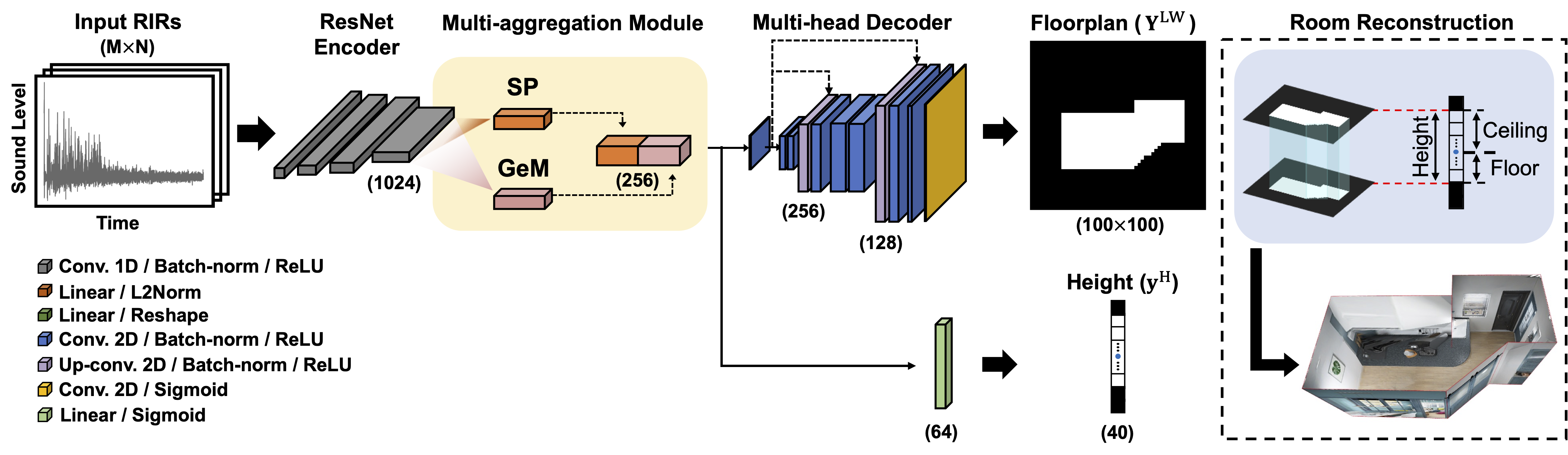
Proposed Model Architecture
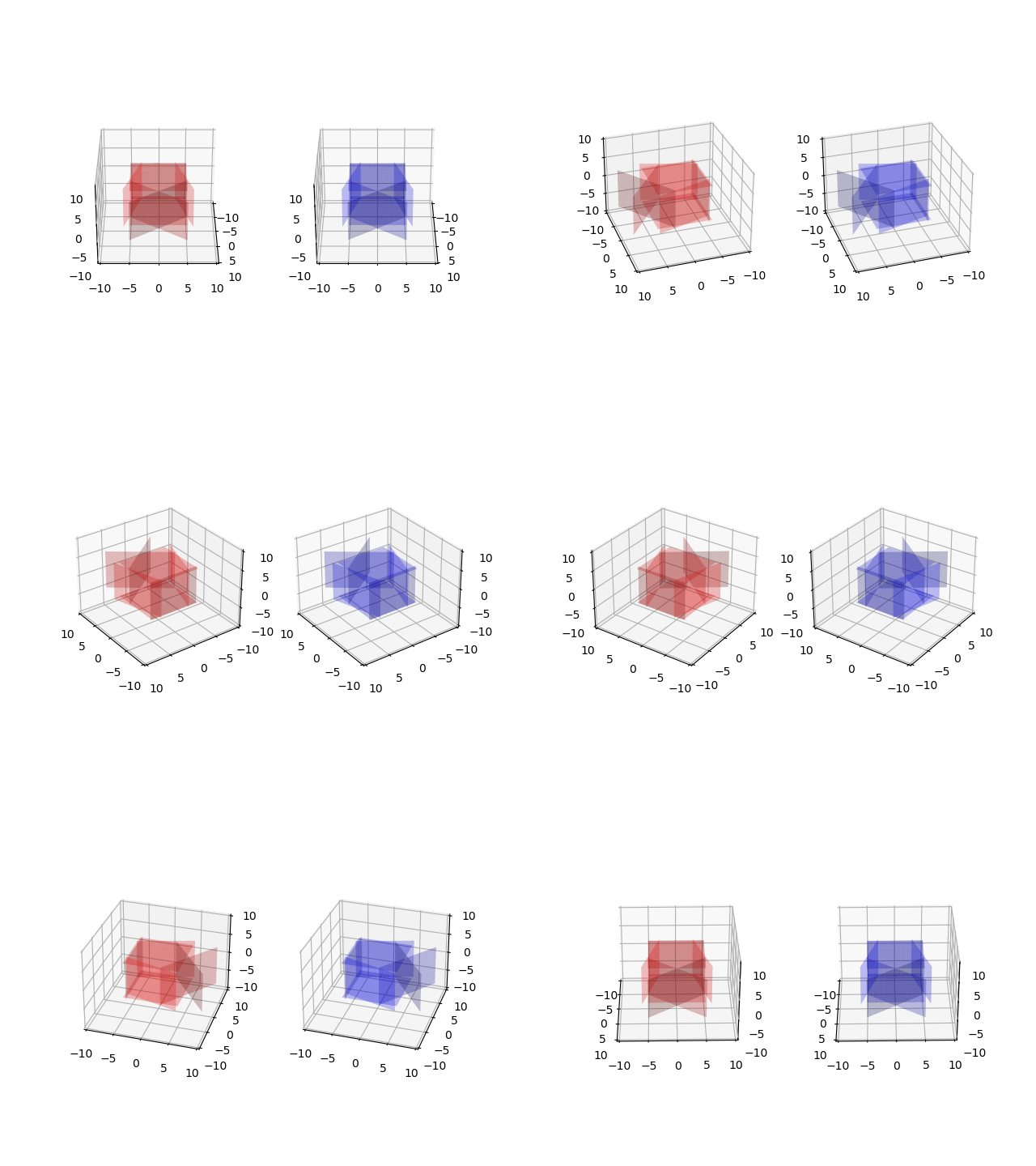
Pentagonal Room (Left: ground truth, Right: estimated)
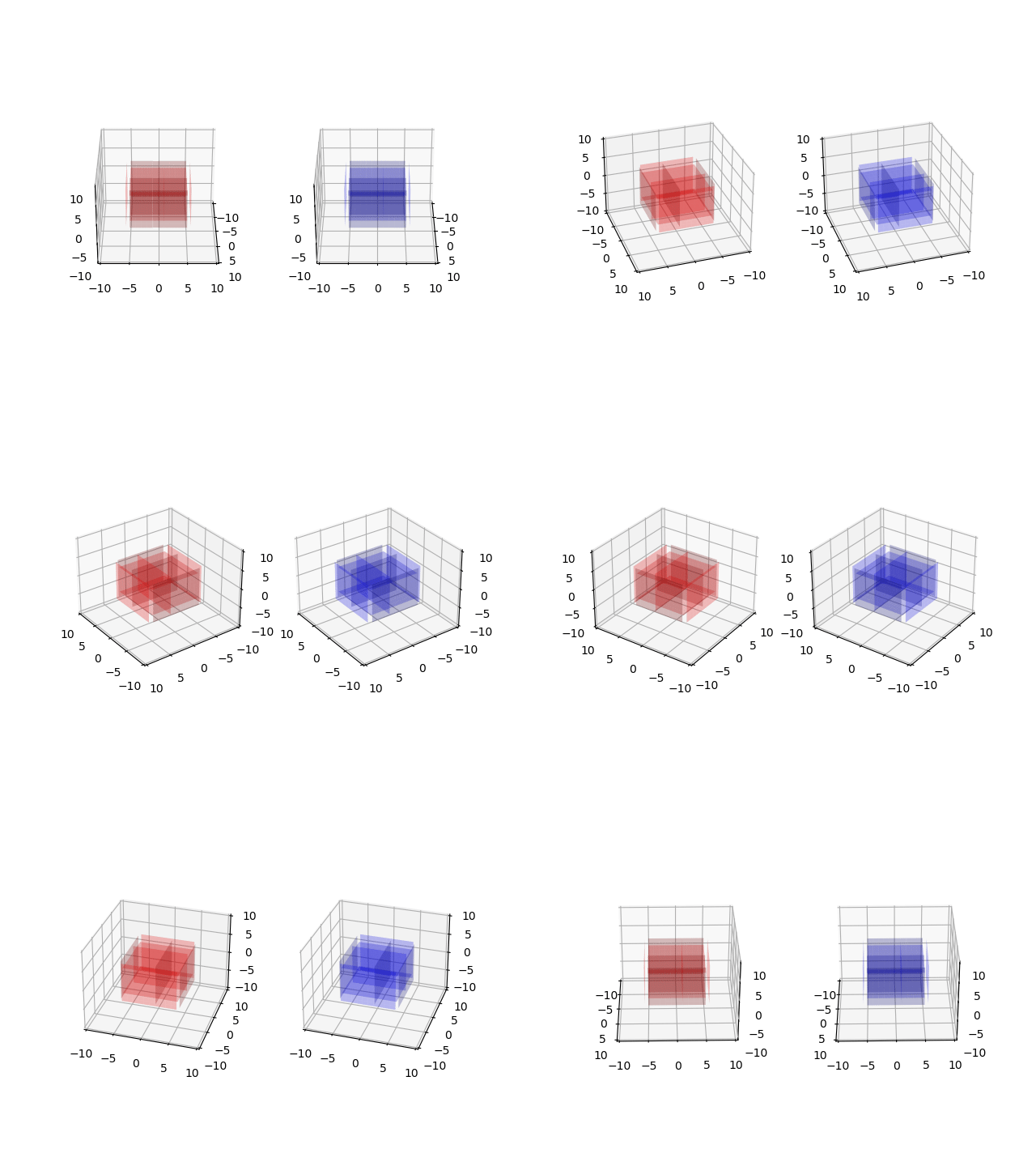
L-shape Room (Left: ground truth, Right: estimated)
Overview
Estimating indoor geometries is a crucial step in creating realistic digital twins of indoor spaces. Traditionally, methods to determine indoor geometries relied on vision-based techniques. However, creating an accurate digital twin becomes challenging when the camera-captured indoor image has hidden areas in the scene.
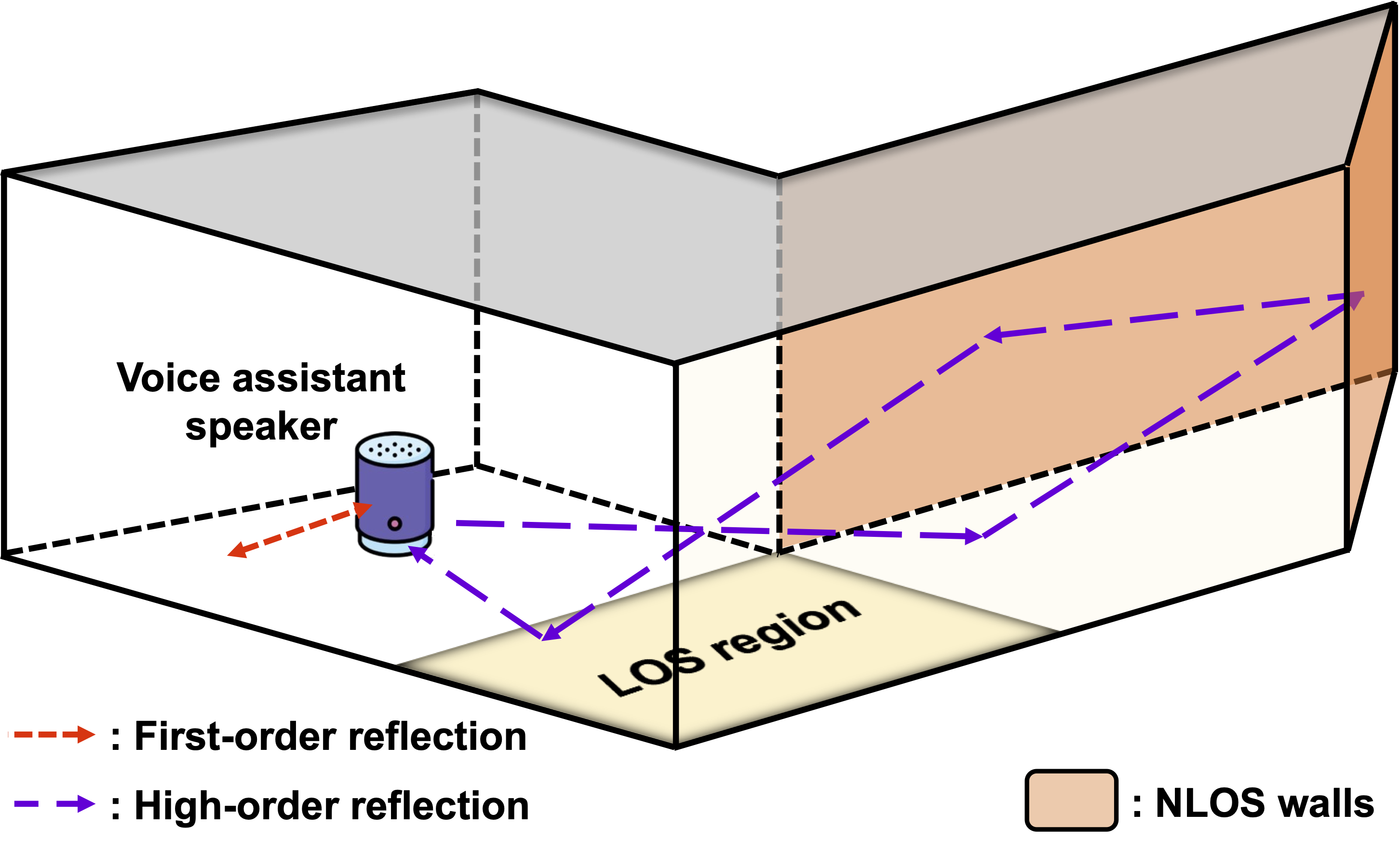
To overcome this challenge, we use acoustic echoes to discover room geometry. Acoustic echoes contain crucial information about indoor geometric characteristics. When an audio device emits sound, it interacts with room boundaries, and this interaction is captured as a room impulse response (RIR). Identifying invisible (non-line-of-sight) walls from measuring device position becomes possible by utilizing high-order echoes reflected from multiple walls.
Related Publications
- Complex room geometry inference via acoustic echoesI. Yeon and J-W. Choi·Forum acusticum euronoise 2025. EAA (european acoustics association)·2025
- DeFTAN-AA: Array Geometry Agnostic Multichannel EnhancementD. Lee and J-W. Choi·INTERSPEECH, Kos Island·2024
- EchoScan: Scanning Complex Room Geometries via Acoustic EchoesI. Yeon, I. Jeong, S. Lee, and J-W. Choi·IEEE/ACM Transactions on Audio, Speech, and Language Processing (TASLP)·2024